Dumpster rentals might seem straightforward—you have a container delivered, fill it, and it gets picked up. But dumpsters aren’t a one-size-fits-all service. When you start gathering quotes, you might notice wide price differences that don’t always add up.
If you look up the national average cost for dumpster rentals, it may seem low compared to rates you’ll hear from vendors in your area. That’s because rates and fees vary dramatically from region to region. While some websites claim dumpster rental fees are anywhere from $200 to $900, you’ll quickly find out those “low prices” probably come with dumpster rental hidden fees.
The reason? Many haulers quote low upfront rates but add unexpected dumpster rental charges later. These hidden fees vary by region, disposal requirements, and project type. If you’ve ever wondered why the total on your final invoice is higher than expected, these are the most common culprits.
How much more could you be paying on your final invoice? Sometimes as high as double the original estimate. A company may have a low initial dumpster rental quote, then tack on fees for “additional services” that are actually required to use the container.
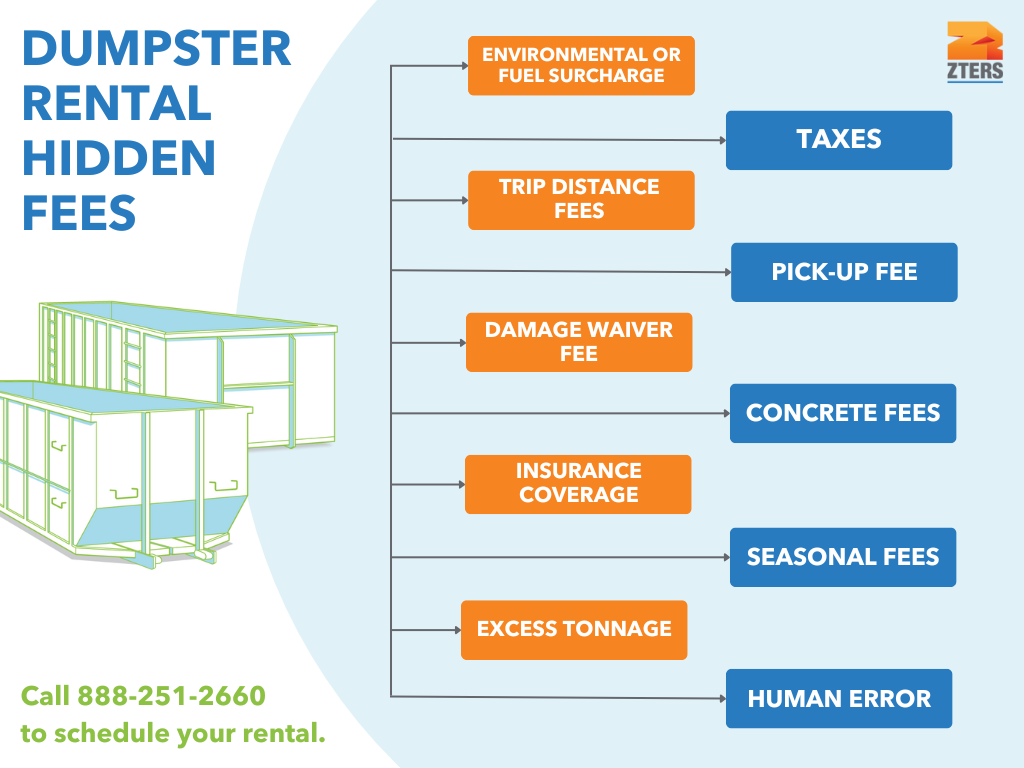
If you’re shopping for dumpster rental services, these are 10 of the most common “hidden” fees that drive up the price of your service.
Table of contents
- 1. Environmental or fuel surcharges
- 2. Taxes
- 3. Trip distance fees
- 4. Pick-up fee
- 5. Damage waiver fees
- 6. Concrete fees
- 7. Insurance coverage
- 8. Seasonal fees
- 9. Excess tonnage
- 10. Human error
- How to Avoid Dumpster Rental Hidden Fees
- Recap: Common Dumpster Rental Hidden Fees
- Infographic: Dumpster Rental Hidden Fees
1. Environmental or fuel surcharges
Fuel costs are part of every dumpster delivery and pickup, but not every company lists them transparently. Some charge 5–8% to cover fuel, while others tack on as much as 35% under “fuel and environmental fees.” Ask upfront if these are included in the initial estimate so you know the true cost. Keep in mind some companies may only add this charge if the location is outside a specific service radius.
2. Taxes
We all know we’re going to pay taxes on most items, but would you know to expect dumpster rental taxes if it wasn’t included in your quote? When gathering estimates from different companies, ask them how taxes are handled. State and local tax rates can add as much as 13.25% to a bill, or even more in some areas. While you can’t avoid taxes, you can avoid this “hidden” fee. Be sure to ask if tax is included or what the tax rate will be for your dumpster rental.
3. Trip distance fees
This fee is usually charged for one of two reasons. Either the location was farther than anticipated in the original quote, or the job site is far from the main road or difficult to access. In both cases, you’ll likely see a trip distance fee added. Are you in a rural area? In most cases you’re going to see mileage fee, so be sure to ask about that. And if there are obstacles that prevent the driver from delivering the dumpster, you may still have to pay for the mileage. Avoid this fee by being open about the distance and road availability. And ensure there is enough room for the delivery truck once the dumpster arrives.
4. Pick-up fee
A pick-up fee is usually standard and openly quoted when you rent a dumpster. But what about early or late pick-ups? Or what if you need service outside the normal delivery and pick-up schedule? Sometimes it happens! If things change during your job and you end up needing early, late or more frequent dumpster service, don’t be surprised to see a fee on your final invoice.
5. Damage waiver fees
A damage waiver fee protects you from any costs associated with dumpster rental damage or lost time. These waivers have a limit, such as $500 of damage, but it can be an important type of protection when renting a dumpster. Whether you find it useful or not, you need to know ahead of time if this is a required cost. Be sure to ask if you don’t see it in your estimate.
Need a Dumpster?
Speak with an account manager for a free quote.
6. Concrete fees
Ever wondered why haulers ask what kind of debris you’re throwing out when you rent a dumpster? Different materials have to be disposed of differently. It generally costs more to dump concrete, for example, so if you’ll be using your dumpster for concrete disposal, you can expect to pay a higher price. Be sure any special materials charges are noted in your quote. You’ll get charged for things like concrete disposal even if you failed to tell the hauler about it in advance.
7. Insurance coverage
You may or may not want dumpster rental insurance, but some haulers require it. If insurance isn’t mentioned at the outset of your rental agreement, be sure to ask about it. If you don’t, you may be surprised to find that line item on your final invoice. Always ask for upfront pricing, especially on insurance, so you clearly understand what you’ll be paying.
8. Seasonal fees
Certain times of the year cause fluctuations in price. For example, if you live in an area where winter weather is harsh, you may pay a premium for delivery and service during winter months. This generally comes up in the quoting process, but double check any fees related to extreme weather conditions.
9. Excess tonnage
When you’re looking for a dumpster rental, you’ll need to estimate how much you expect to dump. Some rentals come with a set amount of tonnage included. If you suspect you could go over the included limit, be sure to ask how much excess tonnage will cost. Otherwise, if you exceed the agreed upon amount, you will definitely end up with an excess tonnage fee. A good waste broker will be able to help you estimate tonnage if you’re not sure.
10. Human error
Dumpster rental companies are run by humans, and humans can make mistakes. Maybe the wrong rate was entered, or an extra delivery fee was mistakenly tacked on. After delivery, check your invoices carefully, and ask about any fee that wasn’t included in your quote. In some cases, the fee may be human error. Don’t be afraid to call and ask about any unfamiliar charge.
How to Avoid Dumpster Rental Hidden Fees
The best way to prevent these extra costs is transparency. When comparing dumpster rental quotes:
- Ask for a complete breakdown of fees.
- Verify what’s included in delivery, pickup, and tonnage.
- Provide accurate details about your materials and site conditions.
If you’re uncertain about a charge, request clarification in writing.
Recap: Common Dumpster Rental Hidden Fees
| Hidden Fee | What It Covers | How to Avoid It |
|---|---|---|
| Environmental / Fuel | Delivery fuel, emissions, surcharges | Ask if fuel costs are built into the estimate |
| Taxes | Local and state tax rates | Confirm if taxes are included |
| Trip Distance | Long drive or difficult access | Give exact job-site distance and clear access |
| Pick-Up | Early, late, or extra pickups | Verify pickup flexibility and costs |
| Damage Waiver | Accidental damage coverage | Ask if it’s required and what it covers |
| Concrete Disposal | Heavy debris disposal | Disclose materials when booking |
| Insurance | Required rental coverage | Confirm upfront whether it’s needed |
| Seasonal | Peak or extreme weather surcharges | Ask if seasonal rates apply |
| Excess Tonnage | Weight over agreed limit | Estimate weight before renting |
| Human Error | Billing or data mistakes | Review invoices and request corrections |
Work With a Transparent Dumpster Rental Partner + Avoid Hidden Dumpster Fees
At ZTERS, we know the questions to ask to avoid dumpster rental hidden fees. We’ve brokered thousands of dumpster rental deliveries and construction site service rentals nationwide for more than a decade. And we negotiate on your behalf, so you receive upfront pricing and no unexpected “hidden” dumpster rental fees.
Give us a call today and let us help find the right dumpster rental for your specific project.
Infographic: Dumpster Rental Hidden Fees