
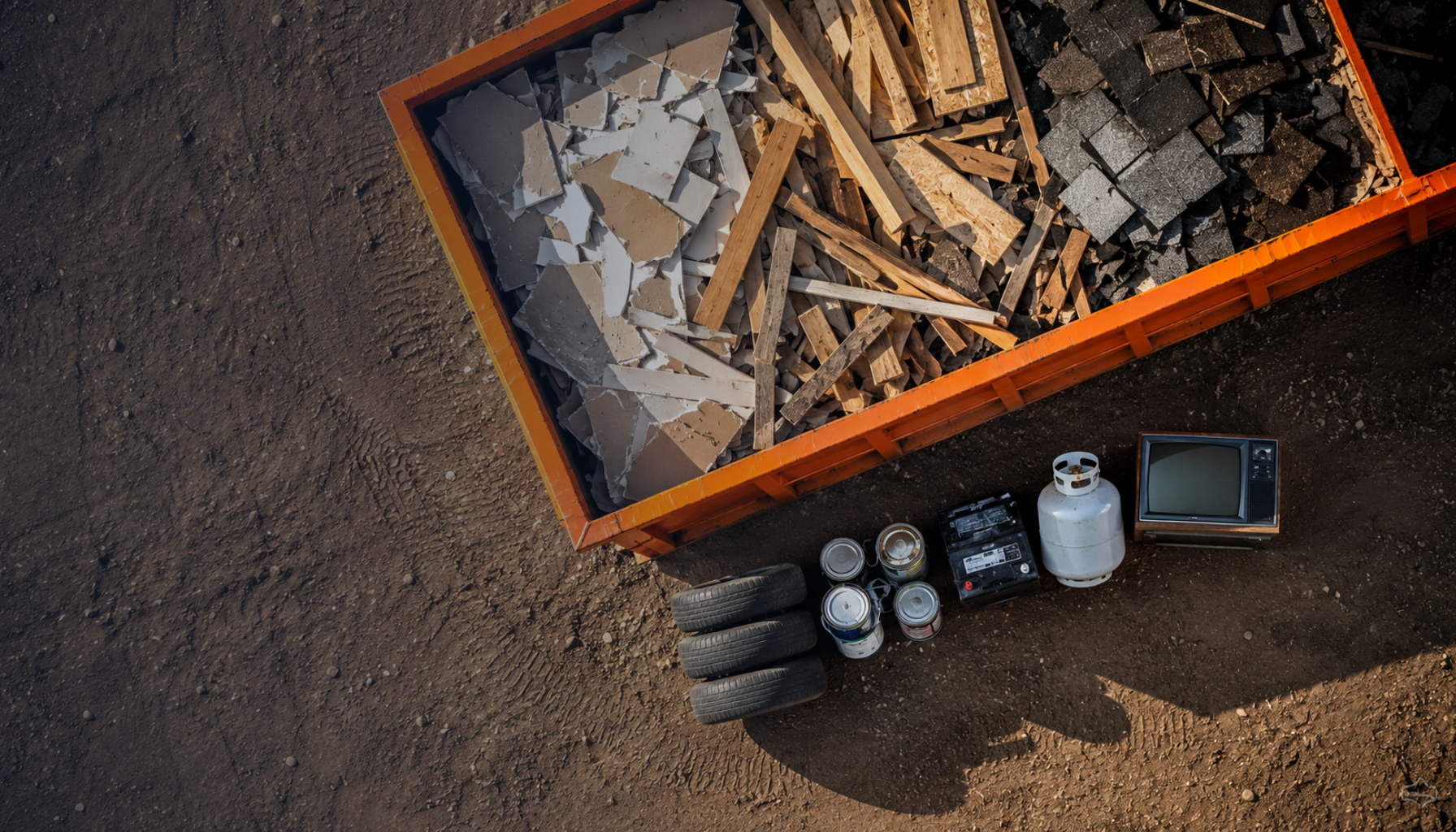
Dumpster Rentals
What Can and Can’t Go in a Roll-Off Dumpster
The debris that lands you a surprise fee, and where it actually needs to go instead. A clear allowed and banned list for busy jobsite teams.
The crew fills the roll-off by lunch. Someone tosses in a couple of old car batteries, a stack of tires, and a half-full can of paint. Nobody thinks twice. Then the invoice shows up with a contamination charge, or the hauler refuses the pickup and leaves the box sitting on your site. Now the job is stalled and you are on the phone sorting out where that stuff should have gone in the first place.
Knowing what can and can’t go in a roll-off dumpster keeps that from happening. Here is the clear list of what you can throw in, what you cannot, why the banned items are off-limits, and where each one actually needs to go.
TL;DR
A roll-off dumpster takes most non-hazardous solid waste: construction and demolition debris, wood, drywall, roofing, furniture, and general junk. It does not take hazardous or regulated items, such as chemicals, wet paint, batteries, tires, electronics, appliances with Freon, or anything flammable. Those need recycling, a household hazardous waste site, or a specialty drop-off. Rules vary by hauler and location, so confirm the banned list for your own site before you load the box.
What can and can’t go in a roll-off dumpster?

A roll-off dumpster is built for bulky, non-hazardous solid waste, and it is off-limits for anything hazardous, liquid, or regulated. That is the whole rule in one line. Most of what a jobsite generates, framing scrap, torn-out drywall, old roofing, and demolition debris, drops in without a second thought. The trouble starts with the short list of items that a landfill legally cannot take.
Those banned items are the ones that trigger contamination fees, rejected pickups, and cleanup delays. Get them sorted out before they hit the box, and a roll-off dumpster rental stays simple.
What can you put in a roll-off dumpster?
You can put almost any non-hazardous solid waste in a roll-off dumpster, which covers the large majority of jobsite and cleanout debris. If it is dry, solid, and not on a regulated list, it almost always goes in.
Common materials that are fine to load:
- Construction and demolition debris. Lumber, framing scrap, plaster, drywall, siding, and torn-out flooring are the bread and butter of a roll-off.
- Roofing material. Asphalt shingles, felt, and tear-off are usually fine, though heavy loads may need a dedicated dumpster because of weight limits.
- Household junk and furniture. Couches, tables, cabinets, and general clutter from a cleanout or renovation.
- Wood and yard debris. Pallets, brush, branches, and untreated lumber. Treated wood, like railroad ties, is a common exception, so confirm it first.
- Metal, cardboard, and non-Freon appliances. Scrap metal, boxes, and appliances such as stoves and washers that do not contain refrigerant.
Weight matters as much as the material. Heavy debris like concrete, brick, dirt, and asphalt is usually allowed, but only in the right size box and often with a strict weight cap. For a full breakdown of what fits, our guide to what you can put in a dumpster rental covers it by material and container size.
What can’t go in a roll-off dumpster?
You cannot put hazardous, liquid, flammable, or specially regulated items in a roll-off dumpster. These are the items that landfills refuse and that trigger fees when they slip into a load. Here is the short list to keep off the box.
- Hazardous chemicals and liquids. Gasoline, oil, antifreeze, solvents, cleaners, pesticides, and other flammable or corrosive materials are all banned.
- Paint. Wet paint is a no. Latex paint can go in only after it is fully dried and solidified. Oil-based paint stays out entirely, and both can be dropped at a PaintCare recycling site in participating states.
- Batteries. Car batteries hold lead and acid. Lithium-ion and button cells carry a fire and toxicity risk. None belong in a dumpster.
- Tires. Tires trap gas and float back to the surface in a landfill, so nearly every hauler bans them. The EPA tracks scrap tire management at the national level.
- Electronics. TVs, monitors, and computers contain lead and mercury and are treated as e-waste in most states.
- Appliances with Freon. Refrigerators, freezers, and air conditioners need certified refrigerant recovery under EPA rules first.
- Propane tanks and hot water heaters. Sealed pressure vessels carry an explosion risk and are refused.
- Mattresses, asbestos, and medical waste. Often banned outright or charged as a special-handling item, and asbestos and medical waste are strictly regulated.
This list is the common core, not the final word. Every hauler and landfill publishes its own prohibited items, and national providers do too, from Waste Management’s not-allowed list to the Dumpsters.com prohibited items guide. Always confirm the rules for the box on your site.
Why are some items banned from roll-off dumpsters?
Items are banned because they are dangerous, illegal to landfill, or damaging to the environment. A roll-off ends up at a landfill or transfer station, and those facilities operate under strict rules about what they can bury. When a banned item shows up in your load, the cost lands back on you.
A few reasons drive most of the bans:
- They leach into the ground. Chemicals, paint, and battery acid contaminate soil and groundwater once they hit a landfill.
- They catch fire or explode. Flammable liquids, propane tanks, and lithium batteries are a fire hazard in a packed truck and at the landfill face.
- They are regulated by law. The EPA and state agencies classify hazardous waste, e-waste, and refrigerants separately, and landfilling them is often illegal.
- They damage the landfill itself. Tires trap gas and resurface, and liquids destabilize the fill, so facilities refuse them.
The practical result for you is money. A prohibited item usually means a contamination or overage fee, and sometimes a refused pickup that stalls the job. Our rundown of common dumpster rental hidden fees shows how fast those charges add up.
How do you dispose of items banned from a dumpster?
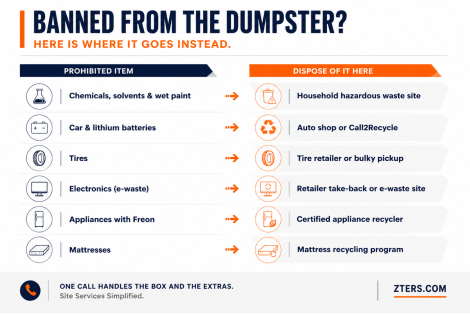
You dispose of banned items through recycling, a household hazardous waste site, or a specialty drop-off, depending on the item. Most have a free or low-cost path if you know where to look. Use the table below as your starting point.
| Banned item | Why it is off-limits | Where it goes instead |
|---|---|---|
| Chemicals, solvents, wet paint | Flammable, toxic, leach into soil | Household hazardous waste collection site or event |
| Car and lithium batteries | Lead, acid, and fire risk | Auto shop, or a battery drop-off via Call2Recycle |
| Tires | Trap gas and resurface in landfills | Tire retailer or a local bulky-waste pickup |
| Electronics (e-waste) | Contain lead and mercury | Retailer take-back or an e-waste drop-off |
| Appliances with Freon | Refrigerant must be recovered first | Certified appliance recycler |
| Mattresses | Often banned or charged extra | Mattress recycling program, or confirm with your hauler |
| Propane tanks, hot water heaters | Explosion risk | Retailer exchange or scrap metal facility |
Authority note: Disposal rules for hazardous and regulated waste vary by state and locality, and the definition of household hazardous waste comes from the EPA. Confirm the current rules for your own site before you haul anything off. The EPA’s household hazardous waste guidance explains the categories, Earth911 locates local recycling and drop-off sites by ZIP code, and Call2Recycle maps battery drop-off points. For a broader walk-through, see our guide on how to dispose of hazardous waste.
What should you look for in a dumpster provider?
Look for a provider who tells you the rules up front, so nothing on your load list becomes a surprise. The prohibited items, the weight caps, and the fees for going over should be clear before the box lands, not after the pickup. That is what keeps a rental from turning into a billing dispute.
Evaluate providers on these factors:
- A clear prohibited items list. You should get the banned list and the weight limit in writing before delivery, not buried in the fine print.
- Transparent pricing. Ask what a contamination or overage fee costs, and whether the quote includes hauling and disposal, so there are no add-ons later.
- The right size options. A provider should match the box to the job, from a 10 yard for a small tear-out to a 40 yard for a full demolition.
- Reliable swaps and pickups. When the box fills, you want a fast swap so the crew is not working around a full dumpster.
- Multi-site coverage. If you run more than one jobsite, one provider who can service all of them beats juggling a different hauler in every market.
How ZTERS coordinates dumpster rentals across your sites
ZTERS coordinates your dumpster rentals so you make one call instead of chasing a hauler in every market. You tell your single point of contact what you need, on which sites, and ZTERS works the whole plan, from delivery to swaps to final pickup.
Here is how the model works. ZTERS is a broker, not a truck owner. It arranges and manages your roll-off dumpsters through a vetted network of vendor partners, and stays accountable for the whole account. When you need debris hauled off one site and a container swapped on another, plus a junk removal run for the items that cannot go in the box, it all moves through one plan, one contact, and one invoice. Across all 50 states.
Savings and turnaround depend on your number of sites and the mix of services, but the core advantage holds whether you run two jobsites or twenty: you are not tracking prohibited item lists and fee schedules across a dozen vendors. That is the idea behind Site Services Simplified. One partner. One contact. One invoice.
Frequently asked questions
Can you put a mattress in a roll-off dumpster?
Sometimes, but many haulers ban mattresses or charge an extra handling fee because they are hard to compact and often have to be recycled separately. If your mattress is still usable, donating or selling it is the easiest route. If not, check for a local mattress recycling program, or confirm with your hauler whether it can go in the box for a fee.
Can you throw paint in a dumpster?
Wet paint cannot go in a dumpster, but dried latex paint usually can. Remove the lid and let it dry out, or use kitty litter to absorb it, then the solid can go in with regular debris. Oil-based paint stays out entirely and belongs at a household hazardous waste facility. When in doubt, treat it as hazardous.
What happens if you put banned items in a dumpster?
You usually get hit with a contamination or overage fee, and in some cases the hauler refuses the pickup and leaves the box on your site until the item is removed. Both cost you money, and a refused pickup can stall the job. That is why it pays to sort prohibited items out before they hit the load.
Can you put appliances in a roll-off dumpster?
Appliances without refrigerant, like stoves, washers, and dryers, are generally fine. Appliances with Freon, meaning refrigerators, freezers, and air conditioners, are not, because the refrigerant has to be recovered by a certified technician first. Once the Freon is removed and certified, the unit can often be scrapped or recycled.
Do prohibited item rules change by location?
Yes. Prohibited items vary by hauler, landfill, and state, because they depend on local disposal laws and what the receiving facility can accept. An item allowed in one market may be banned in the next. Always confirm the prohibited list for the specific box on your site before you load it, and confirm the current rules with your provider.